
In last month’s blog we mentioned that we were continuing to keep up with our roadmap of enhancements to our products, and this month we’re excited to share with you two new reports that we’ve just added to our PaperStack service.
A key feature of PaperStack is easy reporting across all the journals in your portfolio. The first report takes this a step further by allowing you to rank those journals according to various metrics. There are 11 different metrics available, including acceptance rate, days to first or final decision, and mean number of revisions. You might, for example, want to see which journals had most submissions – enabling you to plan workloads and allocate resources.
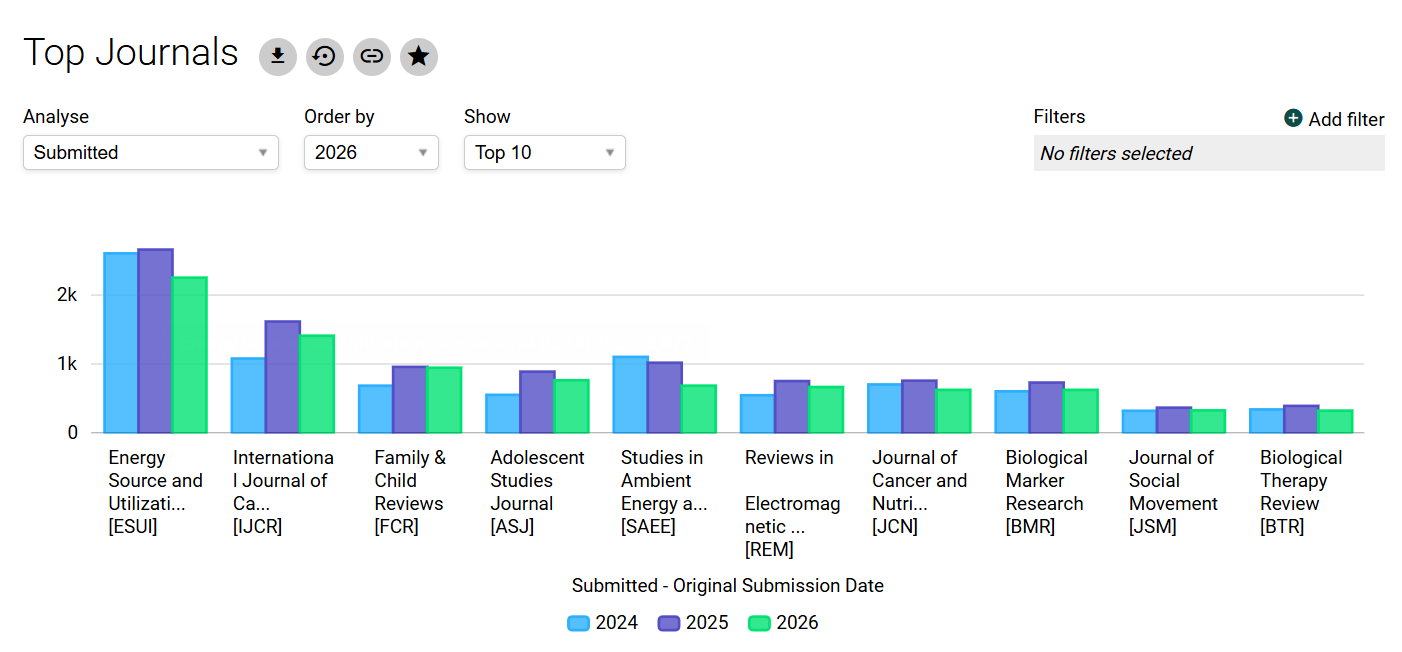
And, because you can change which year to order by, it’s easy to spot trends – for example, is the popularity of a particular journal increasing or decreasing?
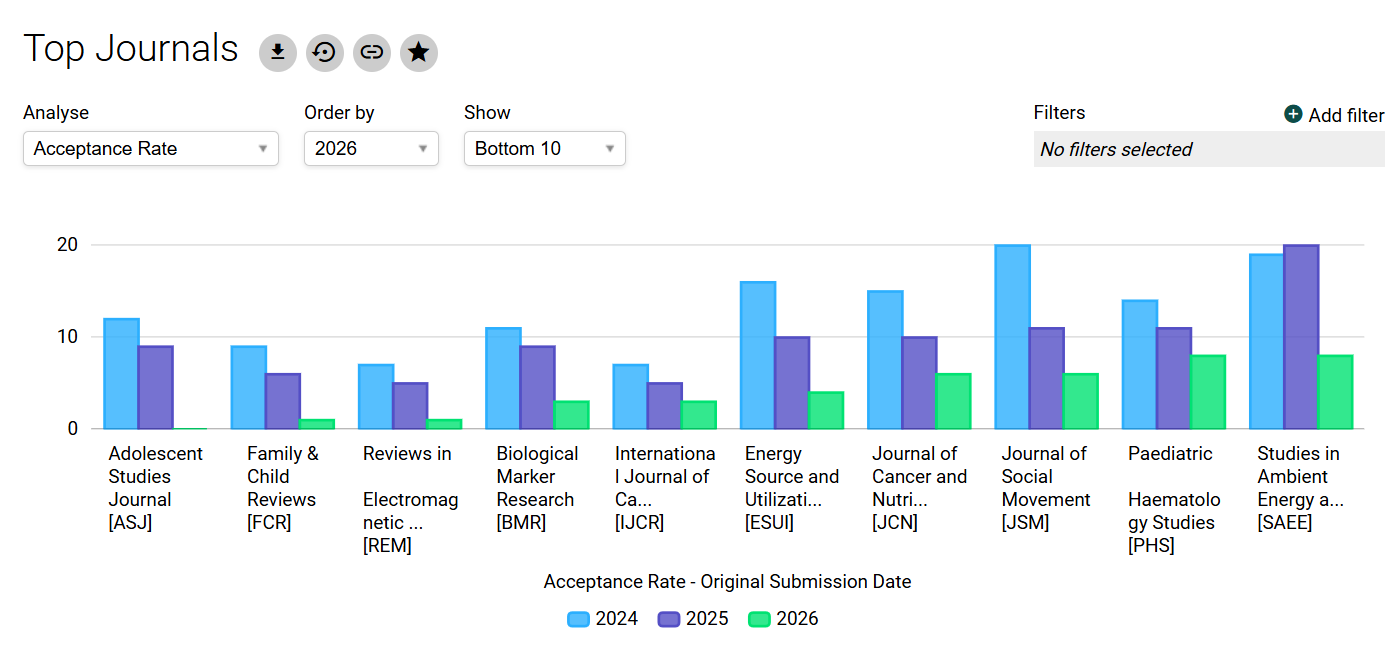
For some metrics, it may be equally or more useful to see the bottom ranked journals instead. Like all PaperStack charts, this one is fully interactive, so you can click through to the articles themselves to see the full story – are low acceptance rates a sign of a highly respected selective journal with an excellent peer review system, or an indication of an issue such as large quantities of out-of-scope submissions?
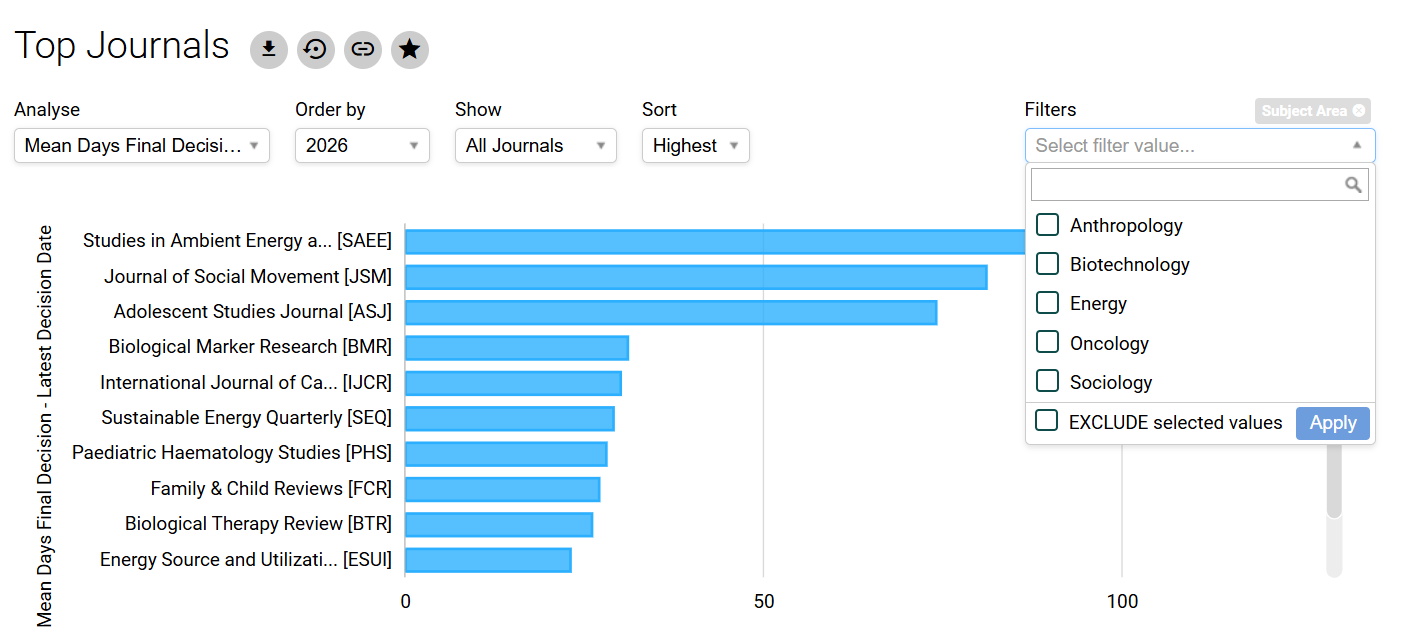
You can also choose to view a complete ranking of all journals. Used alongside the usual filtering options, this provides an invaluable way of viewing a journal’s performance within its field – filtering by subject area prevents the results being skewed by journals with different publication expectations: scientific research may go out of date unless published in a timely fashion, while humanities research is less time-critical.
The idea of focusing on a particular journal’s ranking brings us to the second new report, which draws together all the metrics for an individual journal.
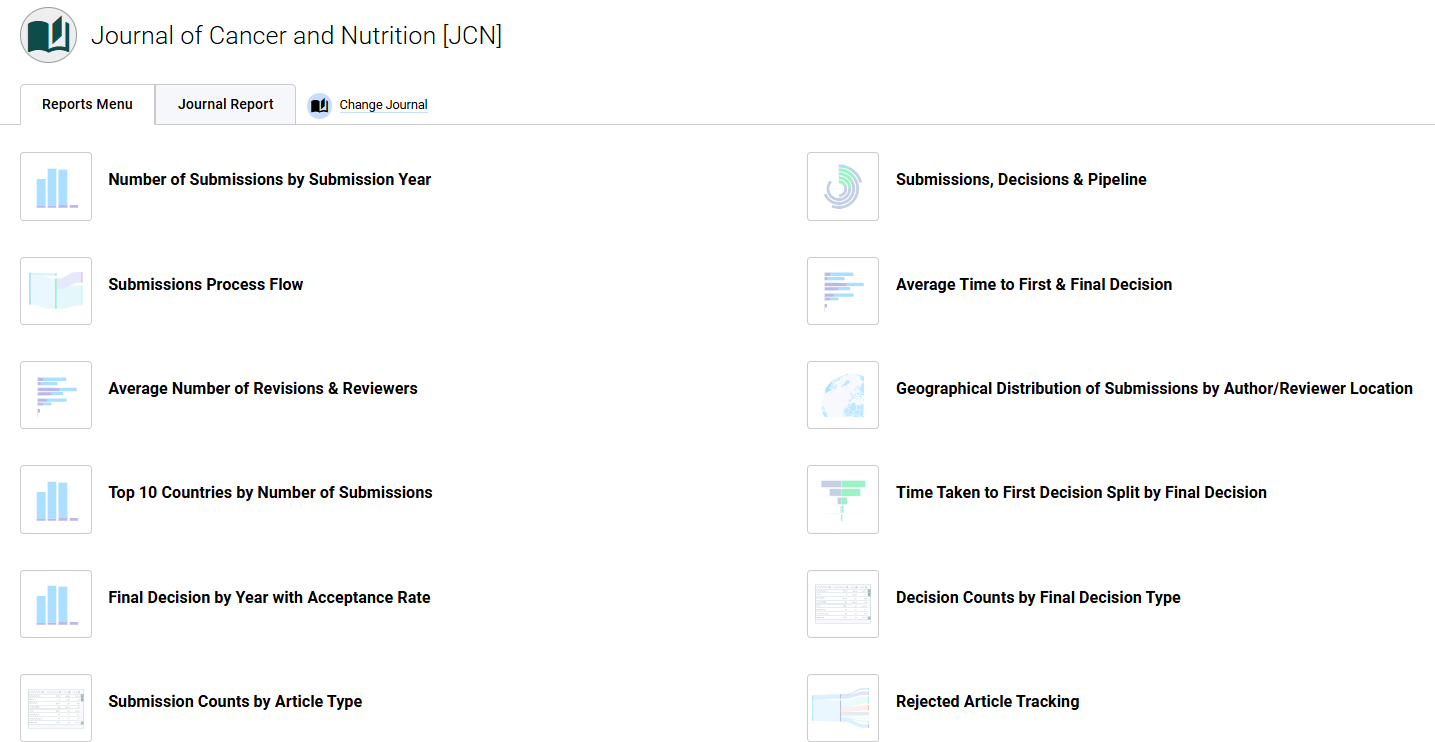
This acts as a sort of dashboard for the journal and supports an assessment of its performance, for example its submissions patterns, the efficiency of its peer review process, and the geographical diversity of its authors and reviewers.
These reports add an invaluable extra dimension to the reports and article/person/organisation hierarchy already available in PaperStack. To find out more, please contact us to request a demo.

